
Uncategorized
BPC-157 and TB-500 Peptides
Oct
BPC-157 and TB-500 Peptides
BPC-157 and TB-500 are two experimental peptides that have attracted considerable interest in regenerative medicine, sports research, tissue repair, and recovery. They are frequently discussed together because both have been investigated for biological processes related to tissue healing, inflammation, vascular activity, and cellular repair.
Despite their popularity, it is important to understand that BPC-157 and TB-500 remain investigational compounds. Much of the evidence surrounding them comes from laboratory and animal research rather than well-controlled human clinical trials. Recent scientific reviews continue to describe the evidence for these peptides as promising but preclinical, with important gaps in long-term safety and human effectiveness.
What Is BPC-157?
BPC-157 is a synthetic peptide derived from a sequence associated with gastric proteins. It has been investigated extensively in preclinical research involving tissue repair, inflammation, vascular responses, and gastrointestinal biology.
Researchers have studied BPC-157 in several animal models to better understand how it may influence cellular signaling and tissue responses following injury. Research has explored pathways involving nitric oxide, vascular function, inflammation, oxidative stress, and growth-factor signaling.
A recent review of BPC-157 research found that studies in rodents have reported changes in inflammatory and oxidative pathways as well as vascular and tissue responses. However, the review characterized BPC-157 as a hypothesis-generating investigational candidate rather than an established therapy.
What Is TB-500?
TB-500 is commonly described as a synthetic peptide related to thymosin beta-4, a naturally occurring peptide involved in cellular processes such as cell migration and tissue remodeling.
Research into thymosin beta-4 has examined processes involved in wound healing, angiogenesis, cellular movement, and tissue regeneration. TB-500 is often discussed in sports and recovery communities because of these biological associations.
However, research on thymosin beta-4 or related compounds should not automatically be interpreted as clinical evidence for every product marketed as TB-500. The identity, formulation, purity, and biological properties of individual products can vary.
BPC-157 and TB-500 Benefits
BPC-157 and TB-500 are commonly associated with research into tissue repair, recovery, inflammation, and cellular regeneration.
BPC-157 research has particularly focused on gastrointestinal tissues, connective tissue, blood vessels, and responses to different forms of injury. TB-500-related research has focused more broadly on cellular migration, wound-related processes, vascular development, and tissue remodeling.
These areas of research explain why the peptides are often discussed together. However, laboratory findings do not establish that using the two compounds together produces specific benefits in humans.
BPC-157 and TB-500 for Recovery
The potential connection between these peptides and recovery is one of the main reasons for their popularity. Researchers are interested in how cellular signaling can influence the body’s response to tissue damage.
BPC-157 has been investigated in animal models of different types of tissue injury, while thymosin beta-4 research has explored processes associated with cell migration and repair.
Nevertheless, there is currently insufficient high-quality human evidence to establish BPC-157 or TB-500 as proven treatments for sports injuries, muscle damage, tendon problems, or other injuries.
BPC-157 and TB-500 for Muscle and Tendon Research
Muscle, tendon, and connective-tissue recovery are frequently mentioned in discussions about these peptides. This interest comes largely from experimental studies investigating cellular and vascular mechanisms involved in tissue repair.
Preclinical findings can provide useful information about biological mechanisms, but animal models cannot fully predict what will happen in humans. Differences in metabolism, dosing, tissue structure, and immune responses can significantly affect outcomes.
For this reason, claims that BPC-157 or TB-500 can reliably accelerate muscle or tendon healing in people should be treated cautiously until supported by appropriate clinical evidence.
Are BPC-157 and TB-500 Safe?
The long-term safety profiles of BPC-157 and TB-500 in humans have not been adequately established. Recent medical literature has specifically highlighted concerns surrounding unapproved injectable peptides, including uncertainty about contamination, manufacturing impurities, inaccurate dosing, and other potential risks.
The safety of a peptide also depends on how it is manufactured, stored, formulated, and administered. A laboratory research product is not equivalent to a regulated pharmaceutical product.
For these reasons, the absence of clearly documented adverse effects in some animal studies should not be interpreted as proof that these compounds are safe for routine human use.
BPC-157 and TB-500 Research
Scientific interest in both peptides continues to grow. BPC-157 research is exploring mechanisms involving inflammation, oxidative stress, vascular signaling, and tissue responses. Research related to thymosin beta-4 is investigating cellular migration, angiogenesis, wound repair, and tissue remodeling.
At the same time, researchers are emphasizing the need for better-designed studies, including pharmacokinetic research, dose-response studies, toxicology assessments, and controlled human clinical trials.
The distinction between preclinical evidence and proven human treatment is especially important when evaluating information about BPC-157 and TB-500 online.
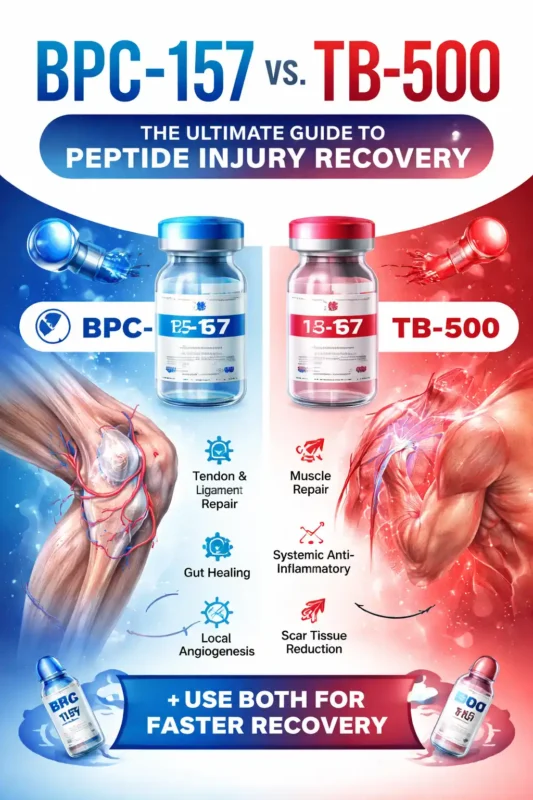
BPC-157 vs TB-500
Although BPC-157 and TB-500 are often grouped together, they are different peptides with different biological origins and research profiles.
BPC-157 has been extensively studied in animal models involving tissue injury, gastrointestinal systems, vascular responses, and inflammation. TB-500 is associated with thymosin beta-4-related research involving cellular migration, wound healing, and tissue remodeling.
Neither should be considered a proven replacement for established medical treatment based solely on laboratory findings.Conclusion
BPC-157 and TB-500 are experimental peptides that have generated substantial interest in regenerative and tissue-repair research. Studies have explored their potential relationships with inflammation, vascular signaling, cellular migration, tissue remodeling, and recovery.
However, the current evidence remains predominantly preclinical. Human safety, optimal dosing, long-term effects, and clinical effectiveness require substantially more research.
For anyone researching BPC-157 and TB-500 peptides, the most important consideration is to separate promising laboratory findings from established medical evidence. Continued scientific investigation may clarify their potential applications, but current research does not establish these compounds as approved treatments for injuries or other medical conditions.
