
Uncategorized
BPC-157 UK
Oct
BPC-157 UK
BPC-157 has become a widely discussed research peptide in the UK and internationally. Interest in BPC-157 is largely connected to research into tissue repair, inflammation, gastrointestinal health, and cellular recovery. It is also frequently discussed in sports and fitness communities because of its potential relationship with injury and recovery.
Despite its growing popularity, BPC-157 is an experimental peptide, and much of the available evidence comes from laboratory and animal studies. Understanding the current research and the regulatory situation is important for anyone searching for information about BPC-157 in the UK.
What Is BPC-157?
BPC-157 is a synthetic peptide consisting of 15 amino acids. Its name is associated with “Body Protection Compound,” and it has been investigated in numerous preclinical studies.
Researchers have examined BPC-157 in models involving the gastrointestinal system, connective tissue, muscles, tendons, blood vessels, and other tissues. Laboratory research has also explored its possible effects on inflammation, oxidative stress, and cellular signaling.
These studies have generated considerable scientific interest, but findings from animal models cannot automatically be applied to humans.
BPC-157 Research in the UK
Interest in BPC-157 has grown among researchers, athletes, and people interested in emerging peptide science. Research discussions commonly focus on the peptide’s potential relationship with tissue repair and recovery.
Studies in laboratory animals have reported effects involving different biological pathways, including nitric oxide signaling, vascular responses, and growth-factor activity. Researchers are continuing to investigate how these mechanisms may influence tissue responses following injury.
However, the amount of online information about BPC-157 is considerably greater than the amount of high-quality human clinical evidence. This distinction is important when evaluating claims about the peptide.
BPC-157 and Tissue Repair
One of the most widely discussed areas of BPC-157 research is tissue repair. Experimental studies have investigated its effects on different types of tissue injury, including injuries involving muscles, tendons, ligaments, and the gastrointestinal tract.
Researchers are particularly interested in how BPC-157 may influence blood-vessel formation, cellular signaling, inflammation, and the body’s response to tissue damage.
These findings provide reasons for continued investigation, but they do not establish BPC-157 as a clinically proven treatment for injuries in humans.
BPC-157 for Sports and Recovery
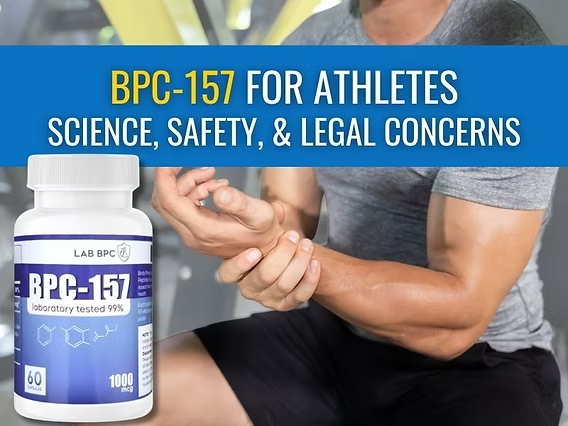
BPC-157 has attracted attention from the fitness and sports community because of its association with recovery research. Online discussions frequently describe it as a recovery peptide for muscles, tendons, and other connective tissues.
However, there is currently insufficient high-quality human evidence to establish that BPC-157 reliably accelerates athletic recovery or heals sports injuries.
People experiencing an injury should therefore not rely on experimental peptide products instead of appropriate diagnosis, rehabilitation, or established medical care.
Is BPC-157 Legal in the UK?
The regulatory status of BPC-157 is an important consideration for anyone searching for BPC-157 in the UK.
BPC-157 uk is not an approved medicine for routine human treatment in the United Kingdom. Products sold online as research peptides should not be assumed to have been evaluated, approved, or manufactured to the same standards as licensed medicines.
The legal and regulatory status of a product can also depend on how it is marketed, supplied, and intended to be used. Purchasing a product described as “research use only” does not make it an approved medicine for personal treatment.
BPC-157 Safety
The long-term safety of BPC-157 in humans has not been adequately established. Much of the existing research has involved animals rather than human clinical trials.
Important questions remain regarding appropriate human dosing, long-term effects, interactions, purity, and potential adverse reactions.
Quality is another concern. Products obtained from unregulated sources may have uncertain identity, concentration, sterility, or contamination risks. These issues are particularly important when discussing injectable research compounds.
BPC-157 uk and Human Research
One of the biggest limitations surrounding BPC-157 is the lack of robust human clinical evidence. Although preclinical research has produced interesting results, animal studies are an early stage of the drug-development process.
Well-designed human studies are needed to determine whether BPC-157 provides meaningful benefits, establish appropriate dosing, evaluate potential side effects, and understand its long-term safety.
Until such evidence becomes available, claims about BPC-157 should be considered within the context of experimental research.
